RV roof problems can feel overwhelming, especially if you’re new to RV ownership. Leaks, cracks, bubbles, and sealant issues often appear without warning, and many beginners aren’t sure where to start or what actually matters.
This complete guide walks you through RV roof repair step by step, using simple explanations and beginner-friendly advice so you can protect your RV without guesswork.
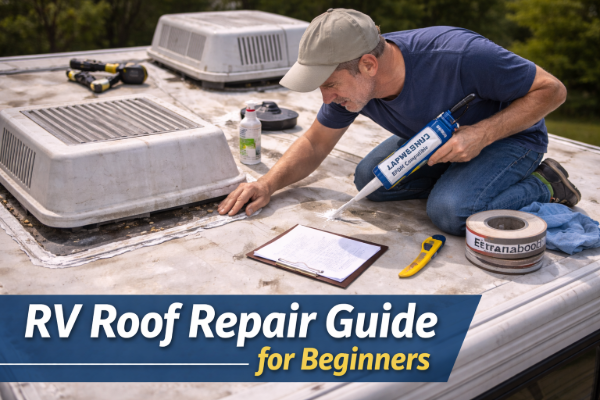
Why RV Roof Repairs Matter More Than You Think
RV roof damage almost never fixes itself. Small issues like cracked sealant or loose seams can quickly lead to:
-
Hidden water damage
-
Mold growth
-
Soft or rotting roof decking
-
Costly interior repairs
Catching and fixing roof issues early is the most cost-effective maintenance task you can do as an RV owner.
Related reading:
Signs of Hidden RV Roof Water Damage
Step 1: Identify What Type Of RV Roof You Have
Before repairing anything, you must know your roof material. Different roof types require different sealants, cleaners, and repair methods.
Most RV roofs are:
-
EPDM rubber
-
TPO rubber
-
Fiberglass
-
Aluminum
Using the wrong product can damage your roof instead of fixing it.
Start here:
How to Identify What Type of RV Roof You Have
Step 2: Inspect Your RV Roof Properly
Every repair starts with a thorough inspection.
Look for:
-
Cracked or lifting sealant
-
Loose seams or trim
-
Bubbling or blistering
-
Soft or spongy areas
-
Discoloration or debris buildup
Inspect both the roof surface and the interior ceiling and cabinets.
Step-by-step guide:
How to Inspect Your RV Roof Step by Step
Step 3: Diagnose The Source Of Any Leaks
Water doesn’t always enter where it shows up.
When diagnosing leaks:
-
Start inside and note stains or damp areas
-
Inspect the roof above and around that area
-
Check common leak points like vents, seams, and edges
Avoid sealing random spots without finding the real cause.
Helpful guide:
How to Diagnose RV Roof Leaks
Step 4: Test For Leaks When The Source Isn’t Obvious
If a leak isn’t visible, a controlled water test can help.
The hose method allows you to:
-
Isolate roof sections
-
Pinpoint leak locations
-
Avoid unnecessary repairs
Detailed instructions:
How to Test an RV Roof for Leaks Using the Hose Method
Step 5: Understand Common RV Roof Problems
Beginners often mistake symptoms for the actual problem.
Common issues include:
-
Sealant failure
-
Adhesive breakdown
-
Trapped moisture
-
Roof membrane bubbles
-
Structural flexing
Learn what these signs mean before repairing.
Related reading:
What Causes RV Roof Bubbles and Blisters?
Step 6: Choose The Right Repair Materials
Not all sealants and tapes work on all roof types.
General guidelines:
-
Rubber roofs need rubber-compatible sealants
-
Fiberglass roofs require rigid-surface sealants
-
Aluminum roofs rely on metal-rated sealants and tapes
Avoid household caulks and roofing tar.
Sealant guide:
Best Sealants for RV Roof Types
Step 7: Prepare The Surface Correctly
Preparation is more important than the sealant brand.
Always:
-
Clean the area thoroughly
-
Remove loose or cracked old sealant
-
Ensure the surface is completely dry
-
Follow temperature guidelines
Skipping prep is one of the biggest beginner mistakes.
Related article:
Common RV Roof Repair Mistakes to Avoid
Step 8: Make The Repair
Depending on the issue, repairs may involve:
-
Resealing seams or fixtures
-
Applying repair tape
-
Reinforcing stress points
-
Coating sections of the roof
Work slowly and methodically. More sealant does not equal better protection.
Step 9: Inspect Repairs After Curing
Once repairs cure:
-
Inspect for gaps or shrinkage
-
Recheck after the first rain
-
Monitor the area over time
Some leaks take time to reappear if not fully resolved.
Step 10: Prevent Future Roof Problems
Prevention saves money.
Best practices include:
-
Inspecting the roof 2–4 times per year
-
Cleaning debris regularly
-
Resealing at the first sign of cracking
-
Adjusting maintenance based on climate
Maintenance guide:
RV Roof Maintenance Schedule by Climate
When To Call A Professional
DIY repairs are great for minor issues, but seek professional help if you find:
-
Large soft areas
-
Structural sagging
-
Extensive water damage
-
Repeated leaks in the same area
Delaying professional repair often leads to roof replacement.
Final Thoughts
RV roof repair doesn’t have to be intimidating. With the right knowledge, tools, and approach, most beginners can handle inspections and basic repairs confidently.
Understanding your roof, diagnosing problems correctly, and using the right materials will protect your RV and save you thousands over time.
This guide is your foundation. Build from it.