RV Roof Repair FAQ (Common Questions Answered)
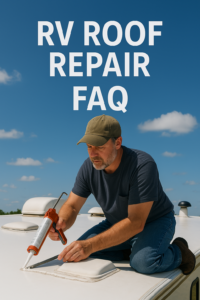
RV roof problems are often confusing because leaks don’t always show where they start, and damage can spread quietly over time. This FAQ answers the most common RV roof repair questions and points you to detailed guides when deeper help is needed.
👉 If you’re brand new to RV roof care, start here first:
Start Here: RV Roof Repair for Beginners
What causes RV roof leaks?
Most RV roof leaks start at:
-
Roof seams
-
Vents and skylights
-
Air conditioner bases
-
Roof edge trim
-
Accessories mounted through the roof
These areas rely on sealant, which can crack, shrink, or lift over time.
👉 Learn more: Common RV Roof Leak Locations and How To Fix Them
Why does water show up far from the leak?
Water often travels along roof decking, framing, or insulation before becoming visible inside the RV. This makes leaks appear unrelated to their true source.
👉 Step-by-step diagnosis: How to Diagnose RV Roof Leaks
How often should I inspect my RV roof?
Most RV roofs should be inspected:
-
At least 3–4 times per year
-
Before and after long trips
-
After severe weather
Regular inspection catches small problems early.
👉 Inspection guide: How to Inspect Your RV Roof Step by Step
How often should an RV roof be resealed?
There is no fixed schedule. Resealing should be based on:
-
Sealant condition
-
Roof material
-
Climate exposure
Resealing too often can trap moisture and cause problems.
👉 Learn when resealing is actually needed: How Often Should You Reseal an RV Roof?
What does a soft or spongy RV roof mean?
A soft or spongy RV roof usually indicates water damage beneath the surface, often affecting the roof decking or insulation. This is a warning sign that should not be ignored.
👉 What to do next: What To Do When Your RV Roof Is Soft or Spongy
Can I walk on my RV roof?
It depends on your RV’s roof design. Some roofs are rated for foot traffic, others are not. Even walkable roofs should only be accessed carefully and when dry.
If unsure, avoid walking on the roof and inspect from safe positions.
What sealant should I use on my RV roof?
Sealant choice depends on your roof material:
-
EPDM
-
TPO
-
Fiberglass
-
Aluminum
Using the wrong sealant can cause adhesion failure or damage.
👉 Compatibility guide: Best Sealants for RV Roof Types
Are RV roof repair kits worth using?
RV roof repair kits can work for small, localized issues but are not a solution for:
-
Soft or sagging roofs
-
Widespread leaks
-
Structural water damage
Kits should never be used to cover unknown or active water damage.
👉 Learn when kits make sense: DIY RV Roof Repair vs Hiring a Professional
How can I find a leak when water is coming from everywhere?
When leaks appear in multiple places, guessing usually makes things worse. A methodical approach is required.
👉 Advanced guide: How To Find an RV Roof Leak When Water Is Coming From Everywhere
Should I use a hose to test for leaks?
Yes — but only if done carefully. A controlled hose test can help locate leaks without causing additional damage.
👉 Safe testing method: How to Test an RV Roof for Leaks Using the Hose Method
What are RV roof bubbles or blisters?
Roof bubbles or blisters often indicate:
-
Trapped moisture
-
Adhesive failure
-
Heat expansion
They may not leak immediately but often signal underlying problems.
👉 Learn more: What Causes RV Roof Bubbles and Blisters?
Can I repair an RV roof myself?
Many RV roof repairs are DIY-friendly if:
-
The roof is structurally sound
-
Damage is limited
-
The leak source is known
Some repairs are better handled by professionals.
👉 Decision guide: DIY RV Roof Repair vs Hiring a Professional: What’s Worth It?
When should I call a professional for RV roof repair?
You should consider professional help if:
-
The roof feels soft or saggy
-
Leaks return after repairs
-
Water damage is widespread
-
Structural integrity is uncertain
👉 Use this guide: When to Call a Pro for RV Roof Repair (Decision Flowchart)
How can I prevent RV roof problems?
Prevention includes:
-
Regular inspections
-
Cleaning debris from the roof
-
Resealing failed sealant promptly
-
Adjusting maintenance based on climate
👉 Preventative checklist: RV Roof Maintenance Checklist (Printable & Seasonal Guide)
Still Not Sure Where to Start?
If you’re unsure how serious your issue is, follow a structured learning path.
👉 RV Roof Repair Guides: Beginner vs Advanced
👉 The Complete RV Roof Repair Guide for Beginners
Important Note
This FAQ provides general educational information only. RV roof designs vary, and some situations require professional inspection or repair. Always prioritize safety and manufacturer guidelines.