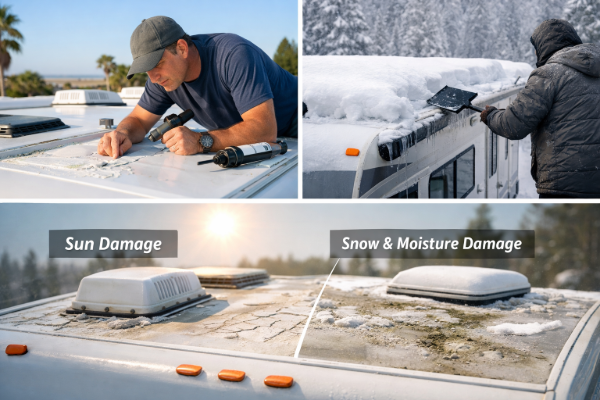
RV roofs do not fail randomly. Most problems come from weather exposure, temperature swings, and moisture over time. The climate you camp and store your RV in plays a huge role in how often your roof needs inspection, cleaning, and resealing.
This guide breaks down a practical RV roof maintenance schedule by climate, so you know exactly what to check and when, based on where your RV spends most of its time.
Why Climate Matters For RV Roof Maintenance
RV roofs are constantly exposed to:
-
UV radiation
-
Rain and humidity
-
Snow and ice
-
Heat expansion and cold contraction
Over time, these conditions cause sealants to crack, materials to shrink or swell, and seams to fail. Following a climate-based schedule helps prevent leaks before they become expensive structural repairs.
RV Roof Maintenance Basics (Applies To All Climates)
No matter where you live, every RV roof should follow these baseline rules:
-
Inspect the roof at least twice per year
-
Check all seams, vents, skylights, and edges
-
Clean the roof before inspections
-
Reseal small cracks or gaps immediately
-
Address soft spots as soon as they are found
Climate determines how often you do these tasks and what you focus on most.
Hot and Sunny Climates (Desert, Southwest, Southern States)
Examples: Arizona, Nevada, Southern California, Texas, Florida
Primary Threats
-
UV damage
-
Dry, cracking sealant
-
Roof membrane shrinkage
Maintenance Schedule
Every 3 months
-
Visual roof inspection
-
Check sealant for cracking or chalking
-
Inspect around vents and AC units
Every 6 months
-
Clean roof surface
-
Touch solder or reseal exposed seams
-
Check roof edges for shrinkage
Annually
-
Deep inspection of membrane condition
-
Consider UV-protective roof coating if roof is aging
Pro Tip
Sun damage is slow but relentless. Small cracks grow fast once sealant dries out.
Cold and Snowy Climates (Northern States, Canada, Mountain Regions)
Examples: Northern U.S., Canada, Rocky Mountains
Primary Threats
-
Freeze-thaw cycles
-
Ice dams
-
Trapped moisture under sealant
Maintenance Schedule
Early Spring
-
Inspect for cracks caused by freezing
-
Check for lifted seams
-
Inspect interior ceiling for hidden leaks
Late Fall
-
Reseal vulnerable areas before winter
-
Remove debris that traps snow and ice
After Heavy Snowfall
-
Visually inspect roof edges when safe
-
Avoid chipping ice directly on sealant
Pro Tip
Water expands when frozen. Even hairline cracks can become major leaks after winter.
Wet and Humid Climates (Coastal, Rainy Regions)
Examples: Pacific Northwest, Southeast, Coastal Areas
Primary Threats
-
Mold and mildew
-
Constant moisture exposure
-
Slow-developing leaks
Maintenance Schedule
Every 3 to 4 months
-
Clean roof to prevent organic buildup
-
Inspect sealant for separation
-
Check vent covers and skylights
Every 6 months
-
Inspect under roof accessories
-
Reseal areas showing discoloration or softening
Annually
-
Full leak test using hose method
Pro Tip
Humidity hides leaks. Mold or stains inside often appear long after damage has started.
Mixed or Seasonal Climates (Four Seasons)
Examples: Midwest, Northeast, Inland Regions
Primary Threats
-
Temperature swings
-
Combined UV and moisture exposure
-
Seasonal neglect
Maintenance Schedule
Spring
-
Full inspection after winter
-
Repair freeze damage
-
Clean roof
Summer
-
Check for UV cracking
-
Inspect after storms
Fall
-
Reseal before cold weather
-
Remove debris
Winter
-
Visual checks when possible
-
Interior ceiling inspections
Pro Tip
Seasonal climates require the most discipline. Skipping one season often causes issues in the next.
RV Roof Maintenance Frequency Summary
| Climate Type | Inspect | Clean | Reseal |
| Hot & Sunny | Every 3 months | 2x yearly | As needed |
| Cold & Snowy | Spring & Fall | 1 to 2x yearly | Before winter |
| Wet & Humid | Every 3 to 4 months | Every 3 months | Frequently |
| Seasonal | Each season | Spring & Fall | Fall priority |
Signs Your Maintenance Schedule Is Not Enough
If you notice any of the following, increase inspection frequency:
-
Ceiling stains
-
Soft or spongy roof areas
-
Peeling or brittle sealant
-
Musty interior smells
-
Repeated leak repairs in the same area
Related reading:
Signs of Hidden RV Roof Water Damage
Final Thoughts
RV roof maintenance is not one-size-fits-all. Your climate determines how quickly materials break down and how often problems appear.
Following a climate-based RV roof maintenance schedule dramatically reduces:
-
Leak risk
-
Repair costs
-
Interior damage
-
Unexpected downtime
A few minutes of inspection now can save thousands later.