RV roof repairs often start with good intentions but end up causing bigger problems than the original issue. Many roof failures are not caused by age alone, but by mistakes made during inspection, cleaning, sealing, or DIY repairs.
Understanding these common RV roof repair mistakes can save you thousands of dollars, prevent leaks, and extend the life of your RV roof.
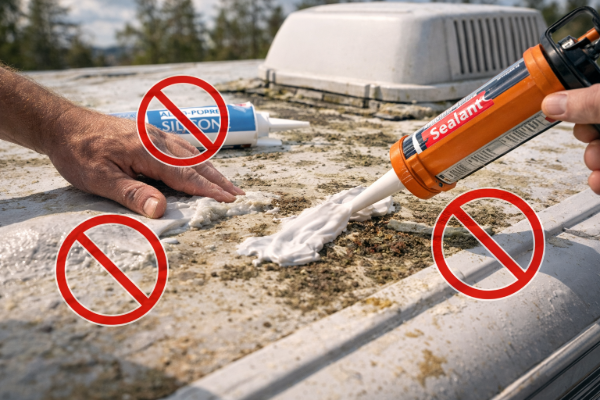
1. Ignoring Small Cracks or Gaps
One of the most common mistakes is assuming that small cracks are harmless.
Hairline cracks in sealant allow moisture to enter slowly. Over time, that moisture:
-
Spreads under the roof membrane
-
Weakens adhesives
-
Leads to bubbling, blistering, and rot
Small problems are always easier and cheaper to fix early.
2. Sealing Over Dirt, Moisture, or Old Sealant
Applying new sealant without proper preparation is a major cause of failed repairs.
Common prep mistakes include:
-
Not cleaning the roof surface
-
Applying sealant to damp areas
-
Sealing over cracked or peeling sealant
Sealant needs a clean, dry, stable surface to bond correctly. Skipping prep almost guarantees the repair will fail.
3. Using the Wrong Sealant for the Roof Type
Not all RV roof sealants are compatible with all roof materials.
Using the wrong product can cause:
-
Poor adhesion
-
Chemical damage to the membrane
-
Premature cracking or peeling
Before sealing, you must know whether your roof is EPDM, TPO, fiberglass, or aluminum.
Related article:
How to Identify What Type of RV Roof You Have
4. Overusing Sealant as a “Fix-All”
More sealant does not equal better protection.
Common overuse problems:
-
Thick sealant traps moisture
-
Sealant cracks as it cures unevenly
-
Water pools around built-up areas
Sealant should be applied smoothly and evenly, not piled on.
5. Repairing Without Addressing the Root Cause
Many RV owners reseal the same area repeatedly without fixing the underlying issue.
Common root causes include:
-
Loose roof fixtures
-
Structural flexing
-
Poor drainage
-
Hidden water damage
If leaks keep returning, the problem is deeper than surface sealant.
Related reading:
Signs of Hidden RV Roof Water Damage
6. Puncturing Roof Bubbles or Blisters
It may be tempting to pop a raised bubble, but this often makes things worse.
Puncturing blisters can:
-
Introduce more moisture
-
Tear the membrane
-
Spread damage under the surface
Roof bubbles are symptoms, not the problem itself.
Learn more:
What Causes RV Roof Bubbles and Blisters?
7. Skipping Regular Inspections
Waiting until a leak appears inside the RV is a costly mistake.
By the time you see:
-
Ceiling stains
-
Soft walls
-
Musty smells
the damage has usually been present for months.
A consistent inspection schedule is critical.
Related guide:
RV Roof Maintenance Schedule by Climate
8. Performing Repairs in Poor Weather Conditions
Sealants and adhesives are sensitive to:
-
Temperature
-
Humidity
-
Direct sunlight
Applying sealant in extreme heat, cold, or rain can prevent proper curing and bonding.
Always follow manufacturer temperature and weather guidelines.
9. Using Household Products Not Designed for RV Roofs
Some RV owners attempt repairs using:
-
Household caulks
-
Roofing tar
-
General construction adhesives
These products are not designed for RV roof movement or materials and often cause long-term damage.
Stick with RV-specific products whenever possible.
10. Delaying Professional Help When Needed
DIY repairs are great for minor issues, but some situations require professional attention.
Consider professional help if you notice:
-
Large soft areas
-
Structural sagging
-
Extensive bubbling or blistering
-
Repeated leak failures
Delaying professional repairs often leads to full roof replacement.
Final Thoughts
Most RV roof problems don’t start big. They grow because of missed inspections, poor prep, wrong materials, or rushed repairs.
Avoiding these common RV roof repair mistakes will:
-
Reduce leak risk
-
Extend roof lifespan
-
Protect your RV’s interior
-
Save significant repair costs
A careful, informed approach always wins with RV roof maintenance.