Warning Signs, Risks And What To Do
Structural water damage is one of the most serious problems an RV roof can develop and one of the easiest to underestimate.
Unlike surface leaks or sealant failure, structural water damage affects the roof decking, framing, and insulation beneath the roof membrane. By the time it becomes obvious, repairs are often more complex and costly.
This guide explains:
-
What structural water damage really means
-
How it develops
-
How to recognize warning signs early
-
When DIY repairs are no longer safe
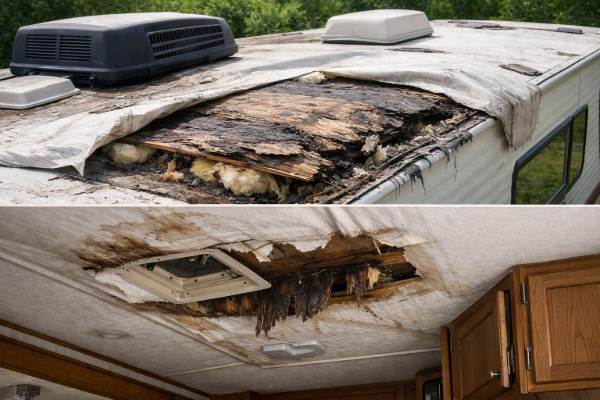
What Is Structural Water Damage in an RV Roof?
Structural water damage occurs when moisture penetrates beyond the roof membrane and saturates the materials that give the roof its strength, including:
-
Roof decking (wood or composite)
-
Structural framing
-
Insulation layers
-
Adhesives bonding the roof system together
Once these materials absorb water, they can lose strength, rot, delaminate, or collapse over time.
This is not a cosmetic issue.
How Structural Water Damage Starts
Structural damage usually begins with small, ignored problems, such as:
-
Cracked or lifting sealant
-
Leaks around vents or roof edges
-
Repeated resealing over trapped moisture
-
Long-term exposure to rain or snow
Water slowly seeps into the roof system and spreads horizontally before symptoms appear inside the RV.
Related reading:
Common RV Roof Leak Locations and How To Fix Them
Warning Signs of Structural Water Damage
Structural damage often shows subtle signs before major failure.
Common indicators include:
-
Soft or spongy areas on the roof
-
Sagging or uneven roof surfaces
-
Persistent ceiling stains that return after repairs
-
Bubbling or delamination of interior panels
-
Musty or moldy odors inside the RV
If any of these are present, the damage may already extend beyond surface layers.
👉 Important guide:
What To Do When Your RV Roof Is Soft or Spongy
Why Structural Water Damage Is So Serious
Structural water damage can:
-
Compromise roof strength
-
Spread far beyond the original leak
-
Cause hidden mold growth
-
Weaken wall and ceiling supports
-
Lead to partial or full roof replacement
Sealing over structural damage does not fix it and often makes it worse by trapping moisture.
How to Confirm Structural Water Damage
You cannot confirm structural damage by appearance alone.
A proper assessment may involve:
-
Carefully probing suspected soft areas
-
Removing small interior panels for inspection
-
Moisture detection tools
-
Professional evaluation if sagging is present
Before doing any repair, the leak source must be identified.
👉 Diagnosis guide:
How to Diagnose RV Roof Leaks
Can Structural Water Damage Be Repaired?
Minor Structural Damage
May be repairable if:
-
The affected area is small
-
Damage is localized
-
Roof decking is mostly intact
-
Moisture has been fully removed
These repairs often require partial removal of roof layers.
Severe Structural Damage
Likely requires professional repair if:
-
Soft areas are large or spreading
-
Roof sagging is visible
-
Multiple leaks have occurred over time
-
Interior structural components are affected
In these cases, roof replacement or structural rebuilding may be necessary.
Why DIY Repairs Often Fail With Structural Damage
DIY repairs fail when:
-
Moisture is trapped beneath new sealant
-
Only the surface membrane is repaired
-
Damaged decking is not replaced
-
The true leak source is missed
This leads to repeat leaks and accelerated deterioration.
👉 Related article:
Common RV Roof Repair Mistakes to Avoid
When Structural Water Damage Means You Should Call a Professional
You should strongly consider professional help if:
-
The roof feels soft over a wide area
-
Sagging or bowing is visible
-
Leaks return after multiple repairs
-
Mold or rot is suspected
-
Structural integrity is uncertain
👉 Use this guide to decide:
When To Call a Pro for RV Roof Repair (Decision Flowchart)
How to Prevent Structural Water Damage
Prevention is far easier than repair.
Best practices include:
-
Inspecting your RV roof regularly
-
Resealing failed sealant promptly
-
Avoiding repeated sealing over old material
-
Adjusting maintenance based on climate
-
Addressing leaks immediately
👉 Prevention checklist:
RV Roof Maintenance Checklist (Printable & Seasonal Guide)
Final Thoughts
Structural water damage doesn’t happen overnight – it develops quietly when small problems are ignored or misunderstood.
Understanding the warning signs and knowing when DIY repairs stop being appropriate can protect your RV and prevent major repair costs.
If you suspect structural damage, proceed carefully. Fixing the cause, not just the surface symptoms, is critical.