RV roof water damage rarely starts with a dramatic leak. In most cases, water enters slowly and quietly, spreading beneath the roof surface long before you ever see dripping water.
By the time damage becomes obvious, repairs are often far more expensive. Learning the early signs of hidden RV roof water damage can help you catch problems before they compromise your RV’s structure.
Why RV Roof Water Damage Is Often Hidden
RV roofs are layered systems made up of:
-
A top membrane
-
Adhesives
-
Roof decking
-
Insulation
-
Interior ceiling panels
Water can travel sideways and downward, meaning the visible damage often appears far from the original leak. This is why routine inspections are critical.
Related guide:
How to Inspect Your RV Roof Step by Step
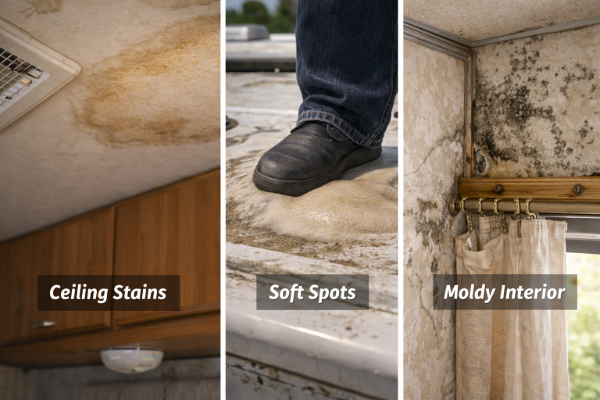
1. Ceiling Stains or Discoloration
One of the most common warning signs is discoloration on the interior ceiling.
Look for:
-
Yellow or brown stains
-
Dark rings or blotches
-
Peeling ceiling material
Even faint staining usually means moisture has been present for some time.
2. Soft or Spongy Roof Areas
When walking on the roof, pay close attention to how it feels underfoot.
Warning signs include:
-
Areas that feel soft or springy
-
Uneven or sagging spots
-
Sections that feel weaker than surrounding areas
Soft spots typically indicate water-damaged roof decking.
Related reading:
What Causes RV Roof Bubbles and Blisters?
3. Bubbling or Blistering on the Roof Surface
Raised bubbles or blisters in the roof membrane often mean moisture or air is trapped underneath.
These bubbles may:
-
Grow over time
-
Feel warm when exposed to sunlight
-
Appear near seams or roof fixtures
Blistering is an early indicator that water is spreading beneath the surface.
4. Musty or Moldy Odors Inside the RV
Hidden water damage often reveals itself through smell before anything else.
Watch for:
-
Persistent musty odors
-
Mold smells after rain
-
Odors strongest near cabinets or ceiling corners
These smells usually indicate moisture trapped in insulation or wood.
5. Warped or Delaminated Interior Panels
Water intrusion can cause interior materials to warp or separate.
Signs include:
-
Wall panels pulling away
-
Bubbling wallpaper
-
Cabinet walls swelling or softening
Once interior delamination appears, roof damage has likely been present for a while.
6. Rust or Corrosion Around Interior Fixtures
Metal components inside your RV can show signs of moisture exposure.
Check for:
-
Rusty screws
-
Corrosion around ceiling vents
-
Discolored metal trim
These signs often point to slow, consistent moisture intrusion rather than a sudden leak.
7. Repeated Sealant Failure on the Roof
If sealant keeps cracking or lifting in the same area, hidden water damage may already be compromising the surface beneath.
Repeated repairs that don’t last are a red flag.
Related article:
Common RV Roof Repair Mistakes to Avoid
8. Increased Humidity Inside the RV
Hidden water damage can raise interior humidity levels.
You may notice:
-
Windows fogging more easily
-
Damp feeling air
-
Difficulty keeping the RV dry
This can lead to mold growth even if visible leaks are not present.
What To Do If You Suspect Hidden Water Damage
-
Inspect the roof immediately
Focus on seams, edges, vents, and skylights. -
Check interior areas near the roofline
Cabinets, corners, and ceiling joints are common problem areas. -
Avoid covering the problem
Painting over stains or sealing blindly can worsen damage. -
Test for leaks
A controlled hose test can help locate the source.
-
Repair early
Early intervention can prevent structural repairs or roof replacement.
Related guide:
How to Test an RV Roof for Leaks Using the Hose Method
Can Hidden RV Roof Water Damage Be Fixed?
In many cases, yes. Minor damage may only require:
-
Sealant replacement
-
Localized membrane repair
-
Drying affected areas
Severe damage may require:
-
Decking replacement
-
Insulation removal
-
Professional roof restoration
Catching damage early greatly expands your repair options.
Final Thoughts
Hidden RV roof water damage is far more common than most RV owners realize. It develops quietly, spreads quickly, and becomes expensive if ignored.
Routine inspections, prompt repairs, and understanding these warning signs can protect your RV, your investment, and your travel plans.