Regular RV roof maintenance is one of the easiest ways to prevent leaks, water damage, and costly repairs. Yet it’s also one of the most commonly overlooked tasks, especially for new RV owners.
This guide includes a simple RV roof maintenance checklist, plus seasonal tips you can follow year-round. It’s designed to be easy to print, save, and reuse.
Why an RV Roof Maintenance Checklist Matters
RV roofs are constantly exposed to:
-
Sun and UV rays
-
Rain and moisture
-
Snow and ice
-
Road vibration and flexing
Without routine maintenance, small issues can turn into major structural damage.
How Often Should You Maintain Your RV Roof?
A good rule of thumb:
-
Inspect every 3–6 months
-
Inspect before and after long trips
-
Inspect at the start of each season
Maintenance frequency may increase depending on climate and roof type.
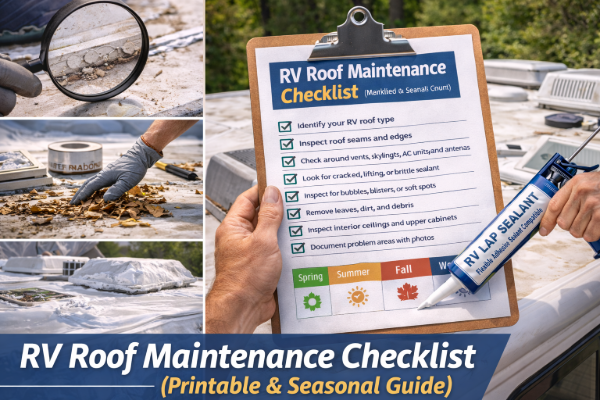
Printable RV Roof Maintenance Checklist
Use this checklist during every inspection.
RV Roof Inspection Checklist
☐ Identify your RV roof type (EPDM, TPO, fiberglass, aluminum)
☐ Inspect roof seams and edges
☐ Check around vents, skylights, AC units, and antennas
☐ Look for cracked, lifting, or brittle sealant
☐ Check for bubbles, blisters, or soft spots
☐ Inspect roof trim and corner joints
☐ Remove leaves, dirt, and debris
☐ Inspect interior ceilings and upper cabinets
☐ Check for stains, odors, or moisture
☐ Document any problem areas with photos
Roof type matters for repairs. Start here if you’re unsure:
How to Identify What Type of RV Roof You Have
Seasonal RV Roof Maintenance Guide
Different seasons create different risks. Use this seasonal breakdown to stay ahead of problems.
Spring RV Roof Maintenance
Spring is one of the most important inspection times.
Focus on:
-
Damage from winter freeze-thaw cycles
-
Cracked or separated sealant
-
Moisture intrusion from melting snow
Spring is the best time to plan repairs before heavy travel season.
Related guide:
How to Inspect Your RV Roof Step by Step
Summer RV Roof Maintenance
Heat and UV exposure break down sealant faster than most people realize.
Check for:
-
Dry, chalky sealant
-
Shrinking or pulling away at seams
-
Soft spots caused by trapped moisture
UV damage is a leading cause of premature sealant failure.
Sealant selection matters:
Best Sealants for RV Roof Types
Fall RV Roof Maintenance
Fall maintenance prepares your RV for winter storage or colder travel.
Focus on:
-
Resealing weak areas
-
Clearing debris from roof and gutters
-
Ensuring seams are watertight
Catching problems now helps prevent winter water intrusion.
Winter RV Roof Maintenance (If Applicable)
If your RV is stored outdoors or used in winter:
-
Remove heavy snow buildup safely
-
Avoid sharp tools that can puncture the roof
-
Monitor for ice dam–related leaks
If your RV is stored, do a full inspection before spring use.
When Maintenance Reveals a Problem
If your checklist reveals issues, don’t ignore them.
Next steps may include:
-
Diagnosing the leak source
-
Performing a controlled water test
-
Spot resealing problem areas
Helpful guide:
How to Diagnose RV Roof Leaks
Leak testing guide:
How to Test an RV Roof for Leaks Using the Hose Method
Should You Do Maintenance Yourself?
Most RV roof maintenance tasks are beginner-friendly and require only:
-
Visual inspection
-
Basic cleaning
-
Simple resealing
Professional help is recommended if you find:
-
Large soft or sagging areas
-
Structural damage
-
Repeated leaks in the same location
Final Thoughts
A simple RV roof maintenance checklist can prevent thousands of dollars in repairs. You don’t need special tools or advanced skills, just consistency and attention to detail.
Inspect regularly. Address issues early. Adjust maintenance based on season and climate.
Your RV roof will thank you.