Using the wrong sealant on your RV roof can cause more damage than leaving a problem alone. Different roof materials require different sealants, and applying the wrong type can lead to cracking, peeling, bubbling, or chemical damage.
This guide breaks down the best sealants for each RV roof type, explains when to use them, and helps you avoid common sealing mistakes.
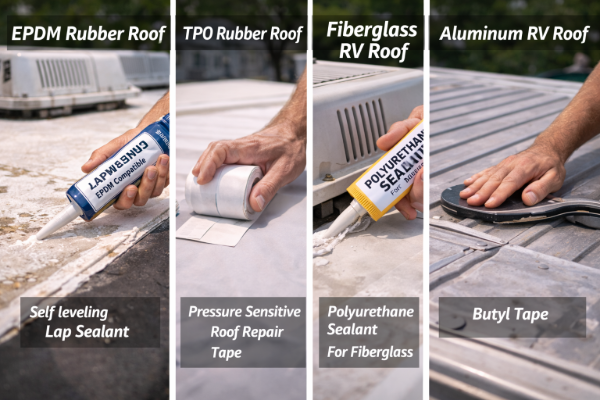
Why RV Roof Sealant Choice Matters
RV roofs expand, contract, flex, and vibrate constantly. Sealants must:
-
Remain flexible
-
Bond properly to the roof material
-
Resist UV exposure and moisture
A sealant that works well on one roof type may fail completely on another.
First: Identify Your RV Roof Type
Before choosing any sealant, you must know what type of roof you have:
-
EPDM rubber
-
TPO rubber
-
Fiberglass
-
Aluminum
If you’re unsure, start here:
How to Identify What Type of RV Roof You Have
Best Sealants for EPDM Rubber RV Roofs
EPDM is one of the most common RV roof materials and requires EPDM-compatible sealants only.
Recommended Sealant Types
-
Self-leveling lap sealant designed for EPDM
-
EPDM-safe roof repair tape
-
Liquid rubber coatings (for larger areas)
What to Avoid
-
Petroleum-based products
-
Household silicone sealants
-
Asphalt or tar-based sealants
Using incompatible products can cause EPDM to swell, soften, or blister.
Best Sealants for TPO Rubber RV Roofs
TPO roofs look similar to EPDM but behave differently and require TPO-approved sealants.
Recommended Sealant Types
-
TPO-specific self-leveling sealant
-
Pressure-sensitive roof repair tape rated for TPO
-
TPO-compatible coatings
What to Avoid
-
EPDM-only products unless explicitly marked compatible
-
Silicone not rated for TPO
TPO is more UV resistant than EPDM but still needs flexible, compatible sealing materials.
Best Sealants for EPDM & TPO Rubber Roofs
If your RV has a rubber roof, choosing a compatible sealant is essential. Recommended options include:
- Dicor Self-Leveling Lap Sealant – Excellent general sealant for rubber roofs.
- Dicor 501LSD-1 Roof Sealant – Great for seams and around roof accessories.
- Geocel Pro Flex RV Flexible Sealant – Remains flexible in changing weather conditions.
- Eternabond Camper Roof Sealant Tape – Strong repair tape for seams and cracks.
Pro Tip: Rubber roof membranes expand and contract. Choose sealants that remain flexible to prevent cracking.
Best Sealants for Fiberglass RV Roofs
Fiberglass roofs are rigid and smooth, which affects how sealants bond.
Recommended Sealant Types
-
Non-sag polyurethane sealant
-
Marine-grade sealants
-
High-quality RV lap sealant rated for fiberglass
What to Avoid
-
Low-quality silicone
-
Sealants not designed for rigid surfaces
Fiberglass roofs often fail at seams and penetrations rather than the surface itself.
Best Sealants for Fiberglass RV Roofs
Fiberglass roofs benefit from sealants and coatings designed for rigid surfaces. A strong choice is:
- Dicor Fiberglass RV Roof Coating – Flexible acrylic formula made for fiberglass and previously coated roofs.
Coatings can help protect the roof and reduce heat load while sealing minor cracks at seams.
Best Sealants for Aluminum RV Roofs
Aluminum roofs are durable but expand significantly with temperature changes.
Recommended Sealant Types
-
Polyurethane sealants
-
Butyl tape (under trim and seams)
-
Non-sag RV lap sealants
What to Avoid
-
Brittle sealants that crack when metal expands
-
Products not rated for metal bonding
Aluminum roofs rely heavily on seam integrity.
Recommended Sealants & Coatings for Aluminum RV Roofs
Aluminum RV roofs expand and contract a lot with temperature changes, so the best options are usually metal-rated sealants, butyl tape for seams/fasteners, and (optionally) a protective metal roof coating for larger surface areas.
Butyl Tape (for seams, trim, screw holes):
Metal Roof Sealant (flexible, for seams/penetrations):
Coatings (for surface protection on aluminum):
Pro Tip: On aluminum roofs, use butyl tape under trim and around fasteners, and use a non-sag metal-rated sealant to finish edges and penetrations. Coatings are best for overall protection, not as a replacement for sealing seams.
Self-Leveling vs Non-Sag Sealants
Understanding sealant behavior is just as important as compatibility.
Self-Leveling Sealant
Best for:
-
Horizontal surfaces
-
Roof fixtures
-
Vents and skylights
It flows outward to create a smooth, waterproof layer.
Non-Sag Sealant
Best for:
-
Vertical seams
-
Roof edges
-
Sidewall transitions
It stays in place without dripping.
When to Use Roof Repair Tape Instead of Sealant
Repair tape can be a good solution when:
-
Covering long seams
-
Reinforcing stress points
-
Making temporary repairs
However, tape should not be used to:
-
Cover active leaks without surface prep
-
Replace damaged decking
-
Seal wet surfaces
Related guide:
How to Diagnose RV Roof Leaks
Sealant Prep Matters More Than Brand
Even the best sealant will fail if applied incorrectly.
Before sealing:
-
Clean the surface thoroughly
-
Remove loose or cracked old sealant
-
Ensure the surface is completely dry
-
Apply within recommended temperature ranges
Skipping prep is one of the most common reasons sealant repairs fail.
Related article:
How to Inspect Your RV Roof Step by Step
How Often Should RV Roof Sealant Be Replaced?
There’s no universal schedule, but general guidelines are:
-
Inspect sealant every 3–6 months
-
Reseal when cracking, lifting, or shrinkage appears
-
Increase inspection frequency in harsh climates
Final Thoughts
Choosing the best sealant for your RV roof isn’t about buying the strongest or thickest product. It’s about compatibility, flexibility, and correct application.
Using the right sealant for your roof type:
-
Prevents leaks
-
Extends roof lifespan
-
Reduces repeat repairs
-
Protects your RV interior
A few minutes of research can save thousands in repairs.