When an RV roof problem shows up, most owners face the same question: Should I fix this myself, or hire a professional?
DIY RV roof repair can save money, but it’s not always the right choice. Some repairs are beginner-friendly, while others can lead to bigger problems if done incorrectly.
This guide breaks down what’s worth doing yourself, when to hire a pro, and how to decide based on cost, risk, and results.
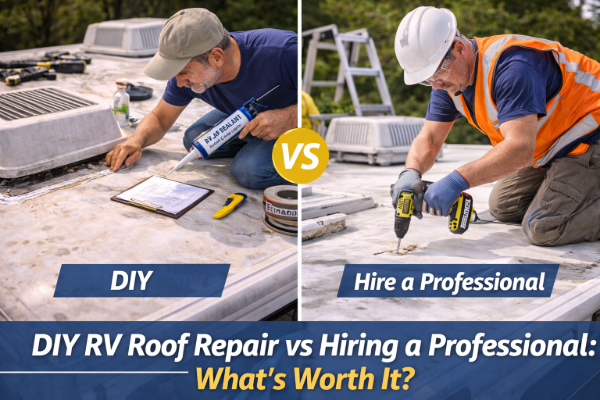
Why This Decision Matters
RV roof damage rarely stays small. A minor leak can turn into:
-
Hidden water damage
-
Mold growth
-
Soft or rotting roof decking
-
Structural issues
Choosing the wrong repair approach can make the problem worse instead of better.
Related reading:
Signs of Hidden RV Roof Water Damage
What Counts as DIY RV Roof Repair?
DIY repairs typically include:
-
Resealing cracked or lifting sealant
-
Cleaning and inspecting the roof
-
Applying repair tape to seams
-
Spot repairs around vents and fixtures
-
Minor leak testing and diagnosis
These tasks require patience and preparation, but not advanced skills.
Beginner guide:
The Complete RV Roof Repair Guide for Beginners
What Requires Professional RV Roof Repair?
Professional repairs often involve:
-
Large soft or spongy roof areas
-
Structural decking damage
-
Full roof membrane replacement
-
Extensive water intrusion
-
Persistent leaks that won’t stop
These repairs require specialized tools, materials, and experience.
Cost Comparison: DIY vs Professional Repair
DIY RV Roof Repair Costs
Typical DIY costs may include:
-
Sealant or repair tape
-
Cleaning supplies
-
Safety equipment
-
Time and effort
DIY repairs often range from low to moderate cost, depending on the issue.
Professional RV Roof Repair Costs
Professional repairs may include:
-
Labor charges
-
Diagnostic testing
-
Material replacement
-
Warranty coverage
Costs vary widely, but professional repairs can be significantly more expensive, especially for structural work.
When DIY RV Roof Repair Is Worth It
DIY repair makes sense when:
-
Damage is localized
-
The roof structure is solid
-
Sealant failure is visible
-
You can clearly identify the leak source
-
You’re comfortable inspecting the roof safely
Helpful inspection guide:
How to Inspect Your RV Roof Step by Step
When Hiring a Professional Is Worth It
Hiring a professional is usually the better choice if:
-
You find large soft areas
-
Leaks keep returning
-
Water damage is extensive
-
The roof is sagging
-
You’re unsure of the roof type or repair method
Risk Comparison: DIY vs Professional
DIY Risks
-
Sealing the wrong area
-
Using incompatible sealants
-
Trapping moisture under sealant
-
Missing hidden damage
-
Voiding roof warranties
Related mistakes:
Common RV Roof Repair Mistakes to Avoid
Professional Risks
-
Higher cost
-
Scheduling delays
-
Variable quality between shops
However, professionals reduce the risk of structural or long-term damage.
How Roof Type Affects the Decision
Roof material plays a major role in repair difficulty.
-
Rubber roofs (EPDM/TPO): Often DIY-friendly for sealing and inspection
-
Fiberglass roofs: DIY for sealing, professional for structural issues
-
Aluminum roofs: DIY for seams and fasteners, professional for large repairs
Sealant compatibility guide:
Best Sealants for RV Roof Types
A Practical Rule of Thumb
Use this simple decision framework:
DIY if:
-
The problem is visible
-
The area is small
-
The roof feels solid
-
You understand the repair steps
Hire a pro if:
-
Damage is widespread
-
Water damage is suspected
-
Repairs require membrane replacement
-
You’re unsure of the diagnosis
How Maintenance Reduces the Need for Professionals
Regular inspections and resealing dramatically reduce major repairs.
Maintenance guide:
RV Roof Maintenance Checklist (Printable & Seasonal Guide)
Resealing timing:
How Often Should You Reseal an RV Roof?
Final Thoughts
DIY RV roof repair can be worth it – when the repair matches your skill level and the problem is clearly understood. For larger or hidden issues, professional repair often saves money in the long run by preventing further damage.
The smartest approach isn’t DIY or professional. It’s knowing when to choose each.